Greener Footprints, Herefordshire Council’s county wide action plan for a zero carbon and nature rich Herefordshire, is organising a mini webinar to help businesses make their workplace more nature-friendly. This half hour, online session with Jamie Audsley, CEO of Herefordshire Wildlife Trust will give expert advice, local examples, and signposting to resources to help you take steps in your work setting. Thursday April 25th 1.00 – 1.30pm Click here to book.

18/04/2024
Join Tim Kaye from Cultivating Learning and Nature (CLaN CIC) who will be giving his new talk on ‘A Fondness for Beetles’ and then indulge in a delicious curry as well. Discover the amazing diversity of beetles, common species you can spot and the rarities in Herefordshire. Location: Peterchurch Village Hall Time and Date: 7.00pm, 18th May Price £12 per person Booking essential: tim@clan-cic.org All profits go back into community activities as we are a social enterprise.
In a couple of weeks Plantlife’s annual campaign – No Mow May – will be launching. Click here to learn more and to register. Click here to read about artificial lawns, and why they are so bad for the environment.
The Importance of Flower Rich Meadows The next event from the Green Group Almeley will be a talk from Caroline Hanks of Herefordshire Meadows about the importance of species-rich grassland, and how Herefordshire Meadows are helping landowners and farmers in meadow restoration across the county. Tuesday 16th April, 7pm, Almeley Village Hall, everyone welcome, £2 suggested donation and refreshments afterwards.
11/04/2024
Join Tim Kaye from Cultivating Learning and Nature (CLaN CIC) who will be giving his new talk on ‘A Fondness for Beetles’ and then indulge in a delicious curry as well. Discover the amazing diversity of beetles, common species you can spot and the rarities in Herefordshire. Location: Peterchurch Village Hall Time and Date: 7.00pm, 18th May Price £12 per person Booking essential: tim@clan-cic.org All profits go back into community activities as we are a social enterprise.
It is hard to pinpoint exactly what marks the arrival of Spring. As the world wakes after the winter shut down, shoots appear, buds form and blossom appears. Insects emerge from hibernation, queen bees bumbling sleepily from flower to flower. The dawn chorus starts to build, woodpeckers drum and birds can be seen checking nest boxes and tree holes. If I get home to find that letters have been pulled from the letter box and strewn over the path, I know that the Great Tits have started to clear their future home of items they do not want. (A bucket

05/04/2024
10th April, 6pm, online Find out about how Radnorshire Wildlife Trust and Herefordshire Wildlife Trust are working together to recover nature in the Lugg Valley. The webinar will be compered by James Hitchcock, CEO Radnorshire Wildlife Trust and include presentations on: Storing water in the uplands – Radnorshire Wildlife Trust’s Wilder Lugg project – Dan Westbury, Wilder Lugg Project Officer, Radnorshire Wildlife Trust Recovering floodplain plants on Lugg Meadows – David Hutton, Nature Reserves Officer, Herefordshire Wildlife Trust Creating wetland habitat at Bodenham Lake – Sarah King, Nature Recovery Manager, Herefordshire Wildlife Trust Wye Adapt to Climate Change? Recovering nature, and creating a climate-resilient landscape within the
The Importance of Flower Rich Meadows The next event from the Green Group Almeley will be a talk from Caroline Hanks of Herefordshire Meadows about the importance of species-rich grassland, and how Herefordshire Meadows are helping landowners and farmers in meadow restoration across the county. Tuesday 16th April, 7pm, Almeley Village Hall, everyone welcome, £2 suggested donation and refreshments afterwards.
04/04/2024
Click here for news from HWT City branch, including volunteering opportunities and courses and events in April and May
04/04/2024
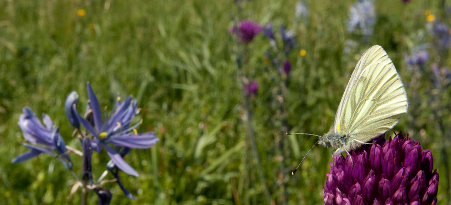
Plantlife’s annual project to encourage everyone to manage their lawn for wildlife is back. Britain has lost approximately 97% of flower-rich meadows since the 1930’s and with them, vital food needed by pollinators, like bees and butterflies has been lost too. But your lawn can help! A healthy lawn with some long grass and wildflowers benefits wildlife, tackles pollution and can even lock away carbon below ground. With over 20 million gardens in the UK, even the smallest grassy patches add up to a significant proportion of our land which, if managed properly, can deliver enormous gains for nature, communities and the climate. This is why Plantlife